
Addressing Readiness: How the MSIW Network is Enhancing Medical Preparedness and Resources
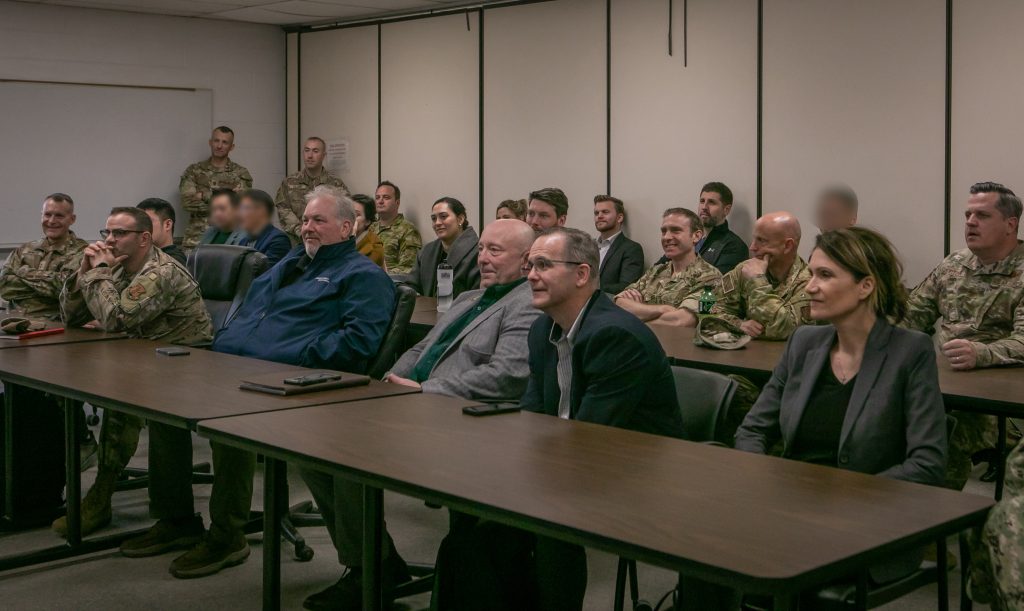
ARLINGTON, VA – In the complex landscape of modern conflict, where the lines between the frontline and safe zones have all but vanished, the traditional approach to military medicine is undergoing a radical transformation. Leading this charge is the Medical Support to Irregular Warfare (MSIW) network, a specialized pillar of the Irregular Warfare Center’s (IWC) broader set of Functional Area Networks (FANs). As a The MSIW FAN was developed in collaboration with the office of the Assistant Secretary of War for Special Operations/Low Intensity Conflict (ASW SO/LIC). The MSIW FAN is more than just a directory of doctors, medics, and academics, it is a strategic force multiplier designed to ensure that when the environment is most hostile, the medical care is at its most sophisticated.
“The MSIW FAN is a specialized network that unites medical professionals dedicated to improve medical care in austere, contested, and denied environments,” said Nathalie Lorentzen, IWC’s Functional Area Network Program Manager.
Conventional medical logistics typically rely on established supply chains and “Golden Hour” evacuations, but irregular warfare often unfolds in austere, contested, and denied environments where those luxuries simply do not exist. The MSIW network addresses these high-stakes gaps by uniting a global community of medical professionals who specialize in operating where the map ends. By fostering deep collaboration across the Department of War (DoW), interagency partners, and international allies, the networks foster collaboration, knowledge sharing, and collective problem-solving.
The network works in partnership with key medical stakeholders, practitioners, and thought leaders to serve as a primary brain trust for irregular challenges in medicine. It prioritizes expert collaboration to solve unique medical and logistical hurdles that exist at both the battlefield and industry wide level. This collaboration bridges the gap between military medicine, private sector innovation, and international health initiatives, creating a common network of professionals to innovate amid a rapidly changing threat landscapes.
Lorentzen added that this collaboration significantly enhances medical support for IW by acting as a facilitator for the broader community. While many entities are driving these efforts within their own organizations, the IWC and its FANs provide a crucial, central platform. “Our role, which is consistent across all networks, is to use the FANs to amplify important work already being done, by bringing experts together, we help the community identify gaps, advance requirements, and share resources more effectively. This allows us to help with collective challenges.”
Ultimately, this effort supports the broader goal of the functional area network to enable the DoW to better support U.S. alongside partner and Allied warfighters through enhanced medical care in the face of adversarial IW. While lethality is often associated with advanced weaponry, the MSIW network proves it is inextricably linked to the confidence of the operator. As the landscape of warfare continues to shift, the MSIW remains a critical safeguard, ensuring that no matter how irregular the fight, the medical support remains world-class and ahead of emerging biological threats and trauma trends.
“Our goal is to continue to evolve the MSIW FAN from a collaborative network into a strategic enabler that proactively shapes the future of austere medical care,” said Lorentzen. “We will achieve this by deepening collaboration across military, civilian, and academic partners and serving as a unified group focused on tackling and solving emerging challenges in support of resilience in the medical field.”