Leadership.
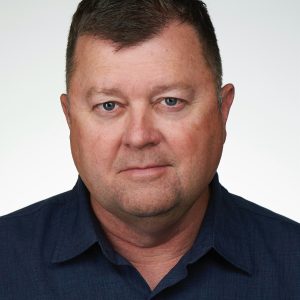
Dr. Robert W. Redding
Colonel (Retired), US Army
Deputy Regional Advisor for NORAD/NORTHCOM/Homeland Defense
Dr. Robert W. Redding serves as a Deputy Regional Advisor for NORAD, NORTHCOM and Homeland at the Irregular Warfare Center. A premier subject matter expert in homeland defense, security cooperation, national resistance strategy, and irregular warfare, Dr. Redding shapes the operational frameworks and strategic theories that prepare joint force partners for hybrid conflict and strategic competition. He brings more than three decades of elite operational and academic excellence to the Center, spanning armored cavalry, infantry, special operations, and whole-of-government resilience initiatives.
Dr. Redding’s expertise is rooted in a distinguished 30-year career as a U.S. Army Colonel, serving at all echelons from tactical combat units to strategic diplomatic missions. Throughout his military service, he commanded armored cavalry, special forces, and infantry formations, culminating in the command of a light infantry battalion. His diverse operational assignments include serving as a Civil Affairs Officer with the 5th Battalion, 19th Special Forces Group (Airborne) during combat operations in Afghanistan; the Liaison Officer to the Israel Defense Forces Home Front Command at the U.S. Embassy in Tel Aviv; and the Deputy Chief of the Office of Defense Cooperation at the U.S. Embassy in Ljubljana, Slovenia, where he directed bilateral security cooperation and defense diplomacy programs. As a Level 3 Joint Qualified Officer, he also demonstrated executive resource management as the Deputy Chief of Staff for Operations and Chief of Staff for the Colorado Army National Guard, overseeing multi-million-dollar resources and statewide homeland defense missions.
Following his military retirement, Dr. Redding seamlessly transitioned his tactical and strategic insights to senior advisory roles across critical defense institutions. He has continued to support the national security community by serving as a senior advisor to the Republic of Georgia’s Ministry of Defense, U.S. Space Command, and U.S. Special Operations Command, focusing on space-domain integration and societal resilience.
Dr. Redding integrates his extensive field experience with strategic scholarship. As an adjunct professor at multiple institutions—including American Public University, Liberty University, and Bellevue University; he has supervised more than 200 graduate theses in intelligence and national security studies. He is a widely published author whose work explores the intersection of resistance movements, hybrid threats, and technological competition. His recent peer-reviewed and professional publications include contributions to PRISM: Journal of Complex Operations, Special Operations, Special Warfare, Armor, The Political Handbook of the World, Essentials of Counterterrorism, Countering Terrorism in the 21st Century and the Small Wars Journal, covering topics ranging from the Slovenian Independence and the Resistance Operating Concept to technological sovereignty and space warfare. He also frequently presents his findings at national and international conferences to strengthen partner capacity in an era of complex conflict.